Global Precast manufactures two SANS 677 storm water pipes that look much alike once they are in the ground: the interlocking joint pipe and the spigot & socket joint pipe. The difference is the joint, and that one detail decides which pipe belongs on your drawings.
The short answer
Specify interlocking joint pipes for open storm water drainage where a sealed joint is not required and a flush outside profile helps keep the trench narrow. Specify spigot & socket joint pipes where the line must resist infiltration or exfiltration, or where the route needs a small, controlled deflection at each joint.
Side-by-side comparison
| Interlocking joint | Spigot & socket joint | |
|---|---|---|
| Standard | SANS 677 | SANS 677 |
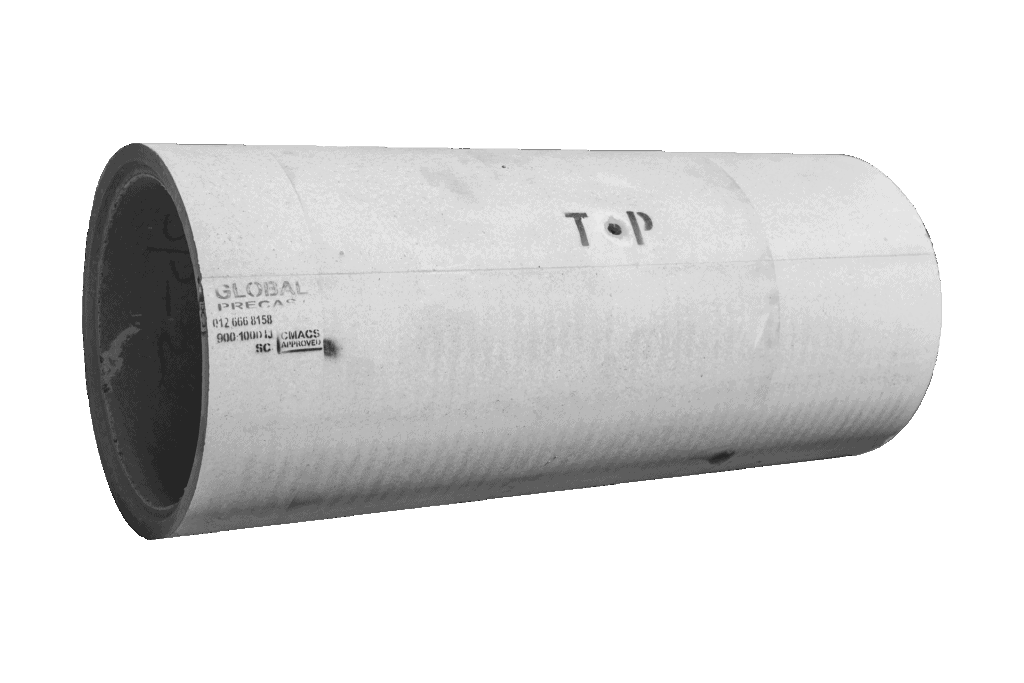
| Joint | Male and female profile formed inside the pipe wall | Spigot on one end, formed socket on the other |
| Seal | None: non-water-tight | Rolling or sliding rubber ring, fitted with soft soap lubricant |
| Use | Storm water drainage only | Storm water drainage where a sealed joint is needed |
| Diameters | 300 mm to 1 500 mm | 300 mm to 1 200 mm |
| Classes | 50D and 100D (others on request) | 50D and 100D (others on request) |
| Laying length | 2.5 m | 2.5 m (450 mm and 525 mm: 2.4 m) |
| Outside profile | Flush: no collar or socket in the trench | Socket is wider than the barrel |
Interlocking joint pipes
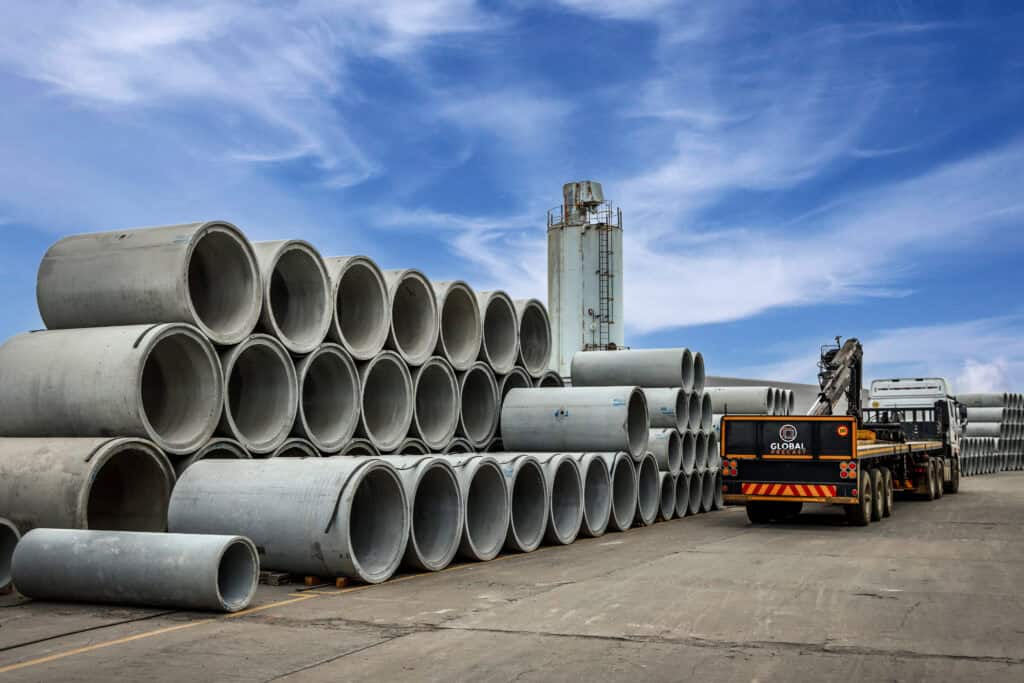
The joint is formed inside the wall of the pipe, with a male profile on one end and a female profile on the other. The pipe keeps the same outside diameter along its full length, so nothing protrudes into the trench and pipes can be laid tight against each other without a collar. No rubber ring or lubricant is needed.
Because the joint is not sealed, these pipes are supplied for storm water drainage only. Rubber collars are available on request where a specification calls for extra protection at the joint.
Watch the inside diameter on large sizes
From 1 350 mm upward, the inside diameter is smaller than the nominal size: a 1 350 mm pipe has a 1 290 mm ID and a 1 500 mm pipe has a 1 410 mm ID. Run hydraulic calculations on the inside diameter, not the nominal one.
Spigot & socket joint pipes
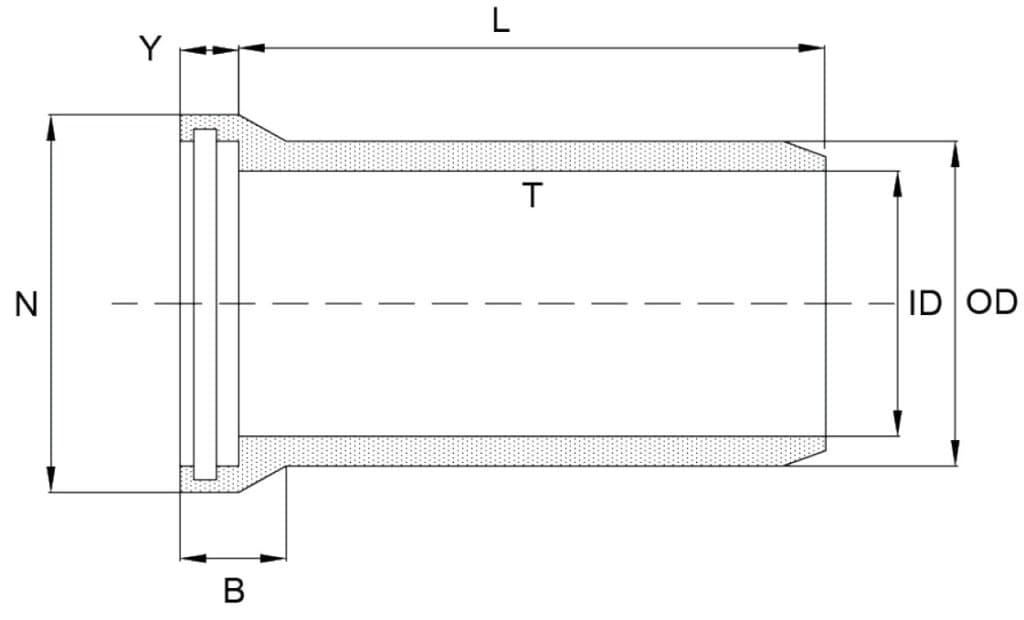
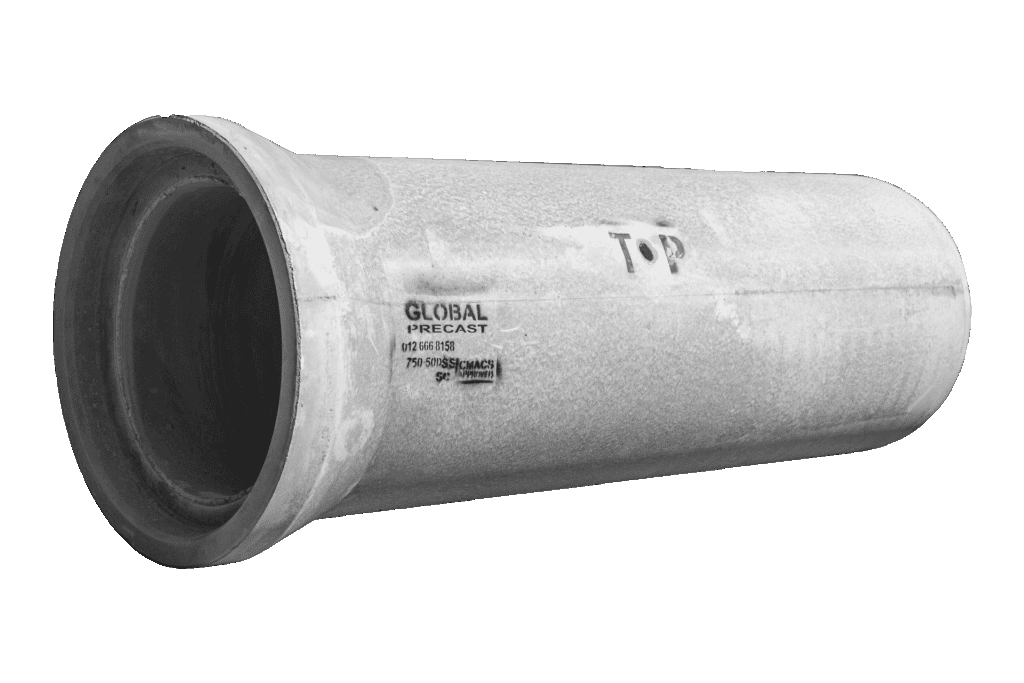
Each pipe has a spigot on one end and a formed socket on the other. The joint is sealed with a rolling or sliding rubber ring, installed with a soft soap lubricant. Do not use a petroleum-based lubricant.
The socket is wider than the barrel, so allow for the socket diameter and length when you set out trench width and bedding. Keep within the allowable joint deflection for each size:
- 300–375 mm: 2.0°
- 450–600 mm: 1.5°
- 675–900 mm: 1.0°
- 1 050–1 200 mm: 0.75°
Exceeding these figures compromises the seal, so set out curves to suit the deflection available rather than forcing the joint.
What about trenchless crossings?
Neither pipe is meant to be pushed. For road and rail crossings installed by pipe jacking, specify in-the-wall joint jacking pipes.
Lifting and handling
Both pipes get heavy at the larger diameters. A 1 500 mm interlocking pipe weighs about 4 290 kg, and a 1 200 mm spigot & socket pipe about 3 450 kg. Confirm lifting capacity on site before delivery.
Need help choosing?
Send your drawings or bill of quantities to the Global Precast sales team and we will confirm the right pipe, class and quantities. Request a quote or contact your nearest branch.
Categories
Latest Articles




Need a Quote?
Speak to your nearest Global Precast branch about pipes, culverts, manholes and sanitation products.